The GOOD HAY GUIDE
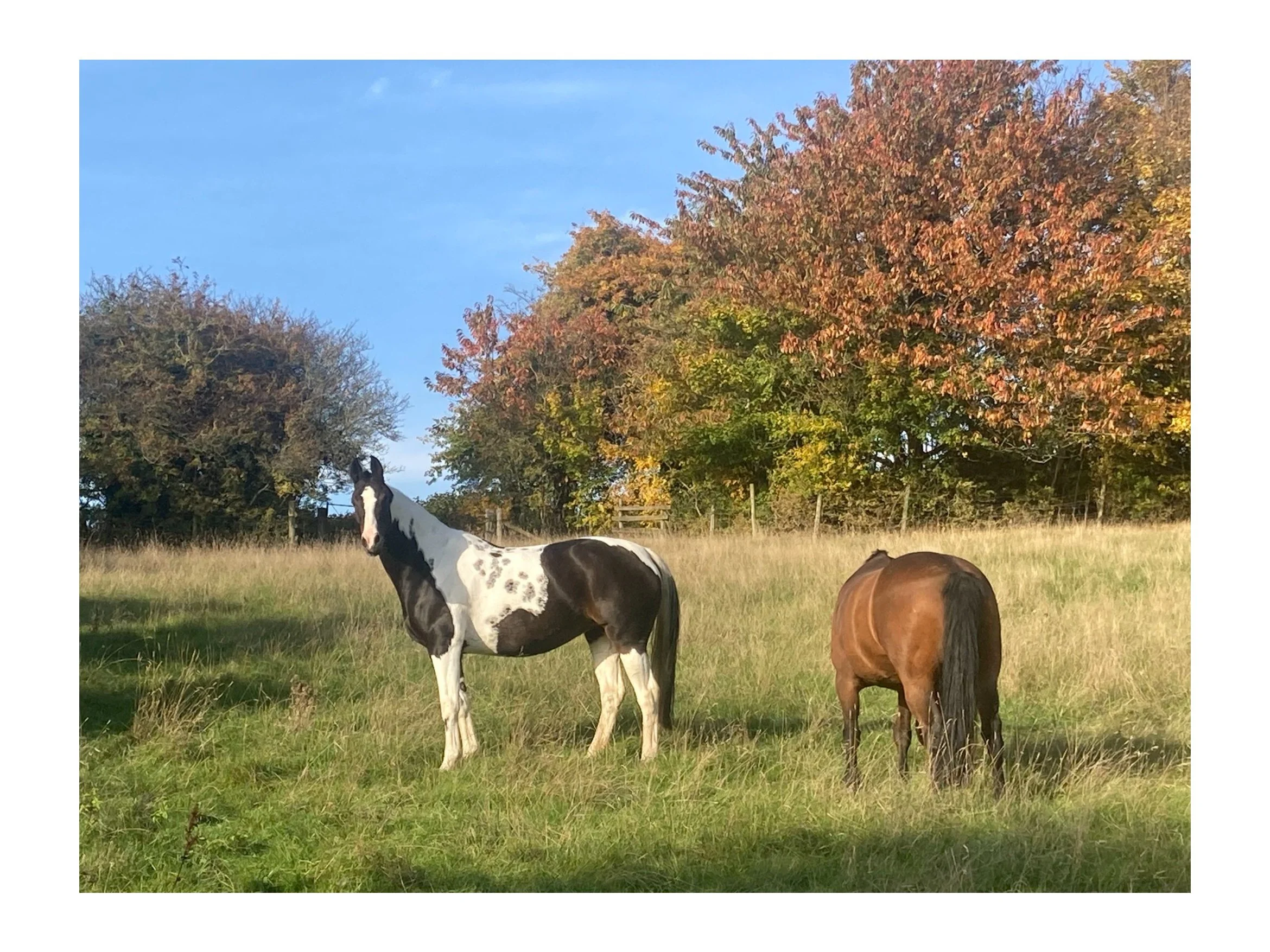
Horses grazing on limestone banks at Lower Harford
Why do we need sustainably grown hay?
Jane Wood, Pat Quinn's daughter explains how sustainable grass production is the solution to health problems now common in many horse populations. Her story highlights how basic principles in equine nutrition and modern ecological thinking can come together to unite joint goals of Biodiversity and animal health
Could horses be the ‘Canary' that signals the need for change?
I come from a background that blends farming and horses. My mum began farming in Gloucestershire when I was 12, and my aunt had already married into a successful racing family. Mum’s farm became an all-consuming passion, where she experimented with what her animals needed and how much the land could reasonably provide. Her fields were always wilder, more diverse, and richer in growth than the neighboring farms
I didn’t pay much attention to this this until I started taking my horses there on holiday. I’d turn them out on steep limestone banks with sparse grasses and a low thatch of herbs and wildflowers. Both horses had been missing work due to what I suspected were stomach issues. But during their first stay on Mum’s land, one of my horses transformed — her poo-stained hocks cleared up, her mood steadied, and her energy returned. We had a brilliant time exploring local training facilities. She looked fantastic and clearly felt it.
Back home, I began researching what I’d witnessed. Several key figures guided me:
Tom Beech (The Osteopathic Vet) showed me how lameness often stems from holding patterns in the body
caused by long term stomach and hindgut discomfort.
Carol Hughes (Equibiome) introduced the concept of gut biome depletion in modern equine diets and the need for dietary diversity.
Nia Angharad Cooke (Finer Forage) and other natural diet experts helped me stay academically grounded.
Jane and Stuart Myers (Equicentral) taught me how nature-friendly farming can create supportive ecosystems around horses.
In 2024, I received a Farming in Protected Landscapes Grant to test and promote hay from farms in Nidderdale. Since forage makes up the bulk of a horse’s diet, the goal was to create a database which allowed us to understand how different hays affect horses with varying needs and workloads, and to promote the best options more widely.
This study involved four horses, all experiencing digestive issues. Over the first year, it became apparent that while standard hay analysis (measuring protein, sugar content, and digestibility) offered some useful insights, the most significant variable was the type of farm the hay originated from.
Hay produced on farms prioritising biodiversity restoration consistently proved safe and beneficial to feed — contrary to some expectations. In contrast, hay from intensively managed farms — typically reseeded, fertilised, and frequently cut — was often linked to recurring health issues, including sore feet, lethargy, faecal water, bloating, mild colic episodes, behavioural reactivity (spookiness), and recurring ulcers.
What is the problem with intensively farmed Hay?
Symptoms such as those listed above suggest that something is going wrong in the body’s normal processes—such as how it controls blood sugar, keeps the gut lining healthy, or maintains the right balance in the digestive system. These problems are often linked to an unhealthy mix of gut bacteria and too much sugar.
Three key factors help explain this pattern
High Sugar Grass Species
Modern livestock grasses are bred for rapid growth and high sugar content — beneficial for cattle, but unsuitable for horses, which evolved to digest low-sugar, high-fibre forage. This mismatch can lead to nutrient overload, insulin resistance, unwanted weight gain, and reduced detoxification efficiency.
Frequent cutting and leaf growth
Repeated cutting encourages the growth of young, highly digestible leaves. While this increases yield, it further concentrates rapidly fermentable nutrients that challenge the horse’s gut lining, which is adapted for slow, fibrous intake through continuous grazing.
Loss of Plant Diversity (Monoculture)
Intensively managed pastures typically consist of very few plant species, limiting the range of phytonutrients available. These naturally occurring compounds — including antioxidants and metabolic regulators — support digestive and immune health. Their absence often necessitates supplementation
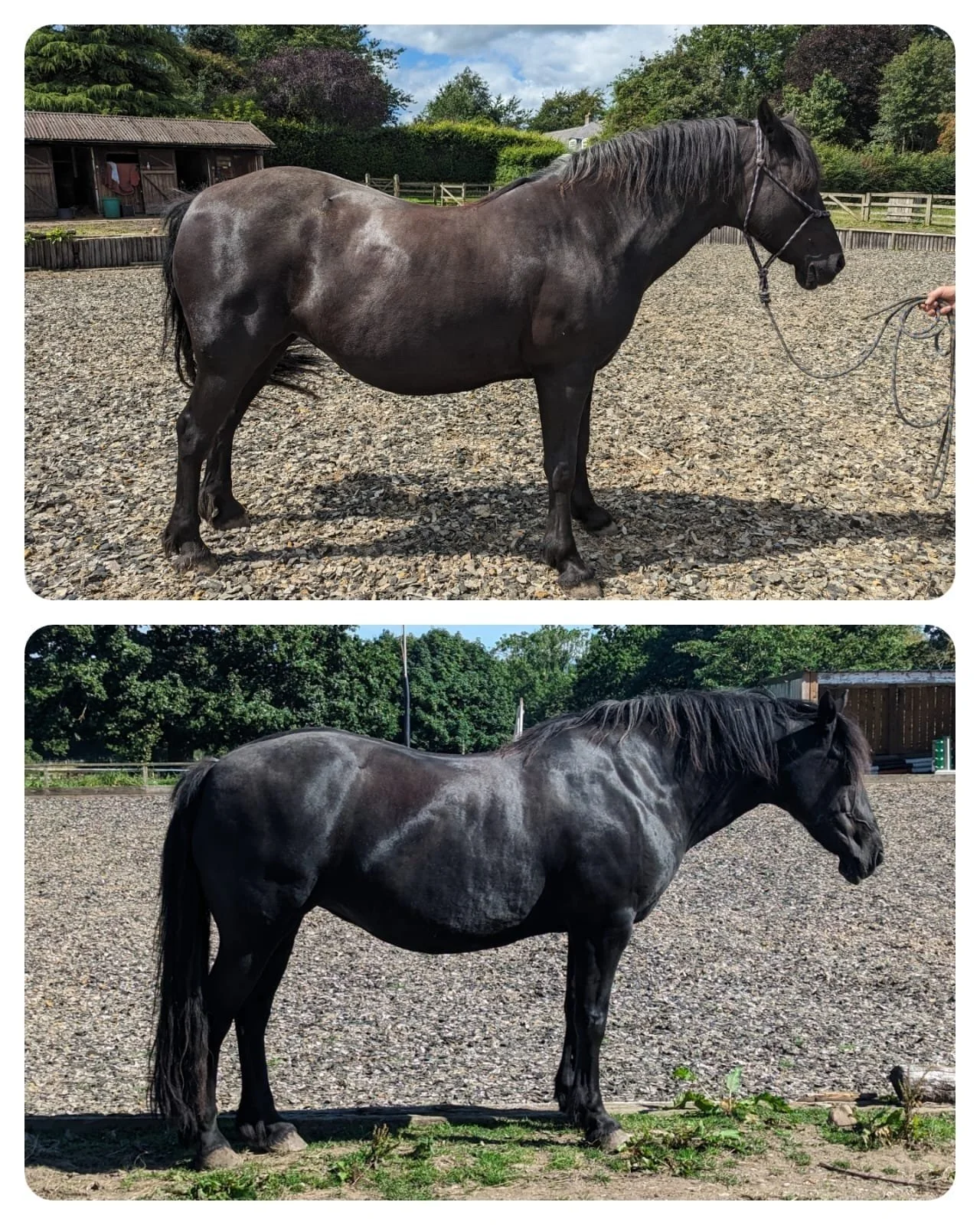
Before and after images of Lady; 6 months on species rich hay